Evaluating Traliant for Smishing Simulations? What Security Teams Should Compare Before Buying
A practical checklist for evaluating Traliant or any awareness vendor for safe SMS phishing simulations, custom scenarios, reporting, privacy, and audit-ready evidence.
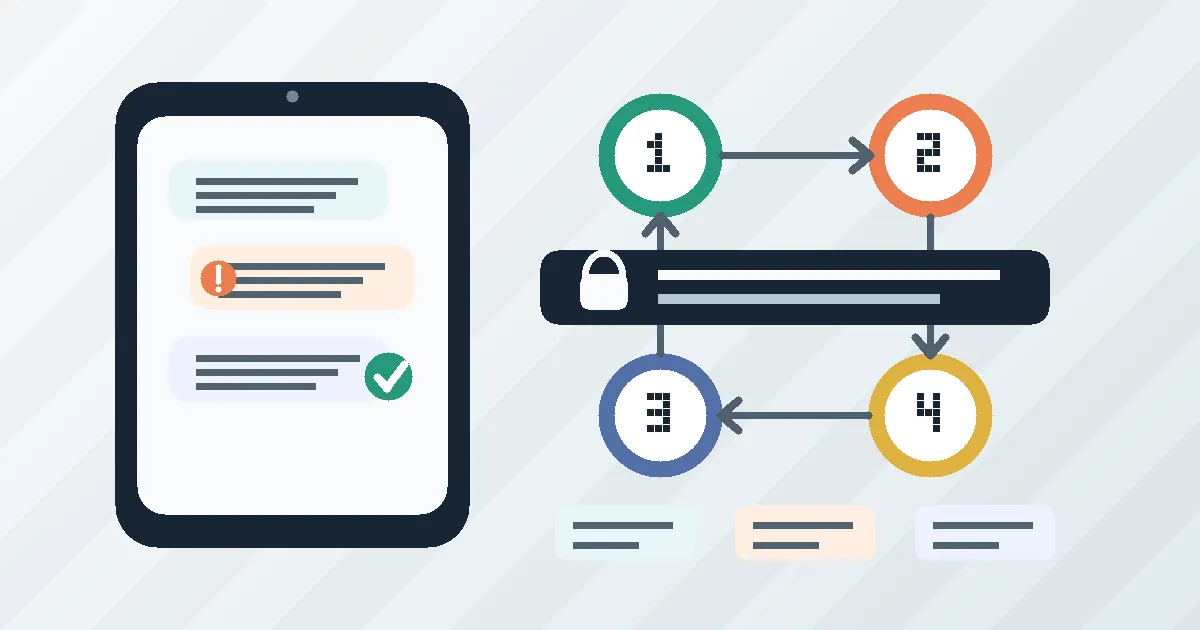
If your team is evaluating Traliant for smishing simulations, start with a narrow question: can the platform help you train employees for text-message phishing safely, repeatedly, and with evidence you can explain to security and compliance stakeholders?
That is different from asking whether a vendor offers general cybersecurity awareness training or email phishing simulations. Smishing adds operational questions around phone numbers, consent, message delivery, custom text scenarios, employee privacy, and what happens when someone reports a suspicious SMS. A good buying process checks those details before a pilot, not after procurement.
This article is defensive only. It does not include smishing templates, delivery tactics, credential collection steps, bypass guidance, or instructions for running unauthorized campaigns.
Why smishing deserves its own vendor checklist
Smishing is not just phishing on a smaller screen. SMS and chat-style messages usually have less visible context than email: no full headers, fewer visual cues, shorter copy, and a strong bias toward quick action.
That changes what employees need to practice. They need to slow down, verify requests through trusted channels, avoid tapping unexpected links, and report suspicious messages even when the message arrives outside the inbox.
High-authority guidance points in the same direction. CISA describes smishing as social engineering through text messages and emphasizes recognition and reporting as part of broader phishing defense: Avoiding Social Engineering and Phishing Attacks.
For security teams, this means a smishing simulation platform should be evaluated on more than content quality. It should support a safe operating model:
- controlled scenarios
- clear approvals
- no real credential or MFA-code collection
- simple reporting paths
- privacy-aware analytics
- follow-up training that improves behavior
- evidence that the program ran as approved
If your current program is mostly email-focused, AutoPhish's guide to mobile phishing policies for SMS, WhatsApp, and QR is a useful baseline before you compare vendors.
What Traliant buyers should verify first
Public vendor pages can tell you whether a company positions around cybersecurity awareness and phishing simulations. They rarely answer every operational question a security team needs answered.
Traliant's public materials describe cybersecurity awareness training and phishing simulation services, including employee training and hands-on simulation language. If Traliant is on your shortlist, use that as a starting point, then verify the exact smishing scope with the vendor. The buying question is not "does the page mention phishing?" The buying question is "can this run our SMS-aware training program safely?"
Ask for a written answer to these points:
- Does the platform support SMS or text-message simulation as a first-class channel?
- Can you run custom text-message scenarios without unsafe realism?
- Are phone numbers stored, processed, and retained in a way your privacy stakeholders accept?
- Can employees report suspected smishing from mobile devices without friction?
- Can the platform distinguish delivered, clicked, reported, and trained outcomes?
- What safeguards prevent real credential, payment, or MFA-code collection?
- Can admins review and approve scenarios before launch?
- Can reports be exported for leadership, audit, or customer assurance?
The answer may be "yes," "partially," "through a managed service," or "not supported." Any of those can be acceptable depending on your needs. What is not acceptable is discovering the limits after you have already promised a multi-channel awareness program.
Custom text-message scenarios: useful, but easy to misuse
Many teams search for smishing simulators because they want custom text-message scenarios. That makes sense: generic SMS examples often feel irrelevant.
Custom scenarios can help employees practice realistic decisions such as:
- verifying an unexpected HR or payroll message
- checking a delivery or visitor-management notification through a known app
- escalating a payment-change request
- reporting a suspicious link sent to a work phone
- slowing down when a message creates urgency outside normal workflow
The safe version of custom smishing training does not ask employees to enter real passwords, approve MFA prompts, share personal data, or interact with live lookalike services. The goal is recognition, verification, and reporting behavior.
When evaluating Traliant or another provider, ask how custom scenarios are governed:
- Who can create or edit text-message scenarios?
- Is there an approval workflow before launch?
- Are risky themes blocked or flagged?
- Can you preview the mobile experience before sending?
- Can scenarios be localized without losing the safety controls?
- Can high-risk departments receive different training without public shaming?
If the vendor makes customization easy but governance vague, the platform may create more internal risk than it removes.
Reporting matters more than click rate
Smishing programs can become misleading if the dashboard only rewards low click rates. A lower click rate might mean employees improved. It might also mean delivery failed, the message looked obviously fake, or people did not know how to report it.
Better reporting should show:
- delivery and bounce status where available
- report rate
- time to report
- repeat exposure trends
- follow-up training completion
- role or department trends where appropriate
- anonymized or aggregated views for privacy-sensitive environments
- exportable evidence of campaign timing, approvals, and outcomes
For broader reporting design, compare the same fundamentals you would use for email simulations: trend data, audit evidence, and remediation workflows. AutoPhish's guide to phishing simulation reporting features covers the metrics and evidence model in more depth.
Privacy and consent questions for SMS training
Smishing simulations touch data that email programs may not: mobile numbers, device context, message delivery metadata, and sometimes personal phones in bring-your-own-device environments.
That makes privacy review part of vendor selection.
Before choosing a smishing simulation platform, define:
- whether you will use work phones, personal phones, or only opt-in pilot groups
- what employee notice is required before SMS-based training
- who can access individual-level results
- how long phone numbers and campaign events are retained
- whether results should be anonymized or aggregated for certain audiences
- how HR, legal, works councils, or employee representatives should be involved
Do not let a vendor's feature set dictate your governance model. Decide your boundaries first, then choose a platform that can operate inside them.
Managed service or self-service platform?
Some buyers want a managed smishing simulation service because the internal security team does not have time to design, launch, and review campaigns. Others need self-service control because they already have a mature awareness program.
Neither model is automatically better.
A managed model can help if you need:
- help designing safe scenarios
- campaign scheduling support
- review of results and next steps
- lower admin workload
- a structured pilot
A self-service model can help if you need:
- fast scenario iteration
- internal approval workflows
- integration with existing awareness operations
- consistent reporting across email, SMS, QR, and voice
- more control over segmentation and privacy settings
For many security teams, the best answer is not "managed or self-service." It is "managed enough during rollout, controllable enough after the pilot."
Questions to ask before a Traliant pilot
Use the pilot to test the operating model, not just the demo content.
Ask:
- Which smishing channels are supported directly, and which require services or integrations?
- Can we run a small pilot without importing unnecessary employee data?
- Can every scenario be reviewed before launch?
- How are phone numbers protected, retained, and deleted?
- Can employees report a suspicious SMS from mobile in one or two steps?
- What happens immediately after an employee interacts with a simulation?
- Can follow-up training be assigned automatically without public shaming?
- Can reports separate delivery problems from user behavior?
- Can results be aggregated for leadership while limiting individual access?
- What evidence can we export for internal review or audit support?
The most useful pilot result is not a dramatic click-rate chart. It is a clear answer to whether the program can run safely every month without confusing employees, annoying privacy stakeholders, or overloading admins.
Where AutoPhish fits
AutoPhish is built for security teams that want phishing simulations and awareness training to operate as a repeatable safety program, not a one-off trick. That means focusing on controlled scenarios, automated follow-up, reporting, privacy-aware design, and evidence that leadership can understand.
If you are comparing Traliant, managed awareness providers, or multi-channel phishing simulation platforms, use the same standard: the platform should reduce operational effort while improving training quality and governance.
For teams that want automated follow-up after simulations, see how phishing simulations with automated user feedback should work in practice.
FAQ
Does Traliant offer smishing simulations?
Traliant publicly describes cybersecurity awareness training and phishing simulation services, but buyers should verify the exact SMS or smishing simulation scope directly with the vendor. Ask whether SMS scenarios are native, managed, integrated through another provider, or not part of the current offering.
What should a smishing simulation platform measure?
At minimum, measure delivery quality, report rate, time to report, interaction rate, follow-up training completion, and trends over time. Click rate alone is too easy to misread.
Are custom text-message scenarios safe for awareness training?
They can be, if they are governed. Safe scenarios should avoid real credential collection, MFA-code requests, payment data, personal-data collection, or live lookalike systems. The goal is to train verification and reporting behavior.
Can smishing simulations support compliance evidence?
They can support evidence that awareness activity is planned, recurring, measured, and reviewed. They do not make an organization compliant by themselves. Keep claims narrow and align evidence with your internal control framework.
Should security teams run smishing tests on personal phones?
Only after privacy, legal, HR, and employee-representation questions are resolved. Many teams start with work phones, opt-in pilots, or policy-backed programs before expanding scope.
Want a safer way to compare phishing and smishing simulation platforms?
AutoPhish helps teams run defensive phishing simulations, automate follow-up training, and produce reporting without turning awareness into a blame game. If you are building a safer program for email, SMS, QR, or role-based scenarios, you can Sign Up and start with a controlled pilot.